Climate Finance in Motion: Morocco Builds Pipeline of High-Impact Projects Worth USD 208 Million
As one of the world’s climate hotspots, Morocco faces increasing threats to water security, food systems and rural livelihoods. These pressures are also accelerating Morocco’s transition toward a more resilient, sustainable economy.
The government has embedded its climate priorities into national development frameworks and is now focused on mobilizing the finance needed to implement actions that advance those targets — translating plans into bankable projects that attract domestic and international investment.
With support from the NDC Partnership through the Partnership Action Fund (PAF), and implementation by the United Nations Environment Programme (UNEP), Morocco is strengthening national systems and capacities to effectively connect priority projects with financing opportunities.
A Structured Project Evaluation Mechanism
Through the PAF-funded project, Morocco is creating a transparent, evidence-based evaluation mechanism to rank climate resilience projects.
Implemented by the Ministry of Energy Transition and Sustainable Development (MTEDD), with guidance from UNEP experts, the process filtered an initial 16 proposals down to eight priority projects.
This country-owned evaluation applied a weighted multi-criteria assessment framework to ensure both technical quality and investment relevance, focusing on five key dimensions:
- Investment readiness
- Economic impact
- Social impact
- Environmental impact
- Implementation readiness
Using this mechanism, Morocco can identify and prioritize projects with the greatest impact, scalability and alignment with Morocco’s Nationally Determined Contribution (NDC) targets. The framework also provides project developers with a clear way to ensure future projects are designed with finance readiness in mind.
Morocco applied this mechanism as part of a broader, structured effort to expand its climate investment pipeline. By combining the national evaluation mechanism with the Project Status Checklist — an NDC Partnership tool to help countries identify, refine and prepare climate projects — and engaging ministries and partners, Morocco ensures that future projects are aligned with national development priorities and ready to access both domestic and international funding.
Priority Projects for Climate Resilience and Low Carbon Growth
The evaluation identified a portfolio of eight investment-ready projects representing approximately USD 208 million in opportunities across adaptation, low carbon growth and circular economy. While all are potentially high impact, some rely heavily on public funding, highlighting an opportunity for private sector partnerships and blended finance mechanisms to enhance scalability.
Together, these projects present a set of climate resilience-focused, NDC-aligned investment opportunities:
- Enhancing resilience of pastoral systems in the Oriental region, with USD 50 million in funding required: This large-scale adaptation initiative will support over 100,000 pastoralists through sustainable rangeland management and ecosystem restoration. The project strengthens rural economies while restoring carbon-rich landscapes that contribute to national mitigation targets.
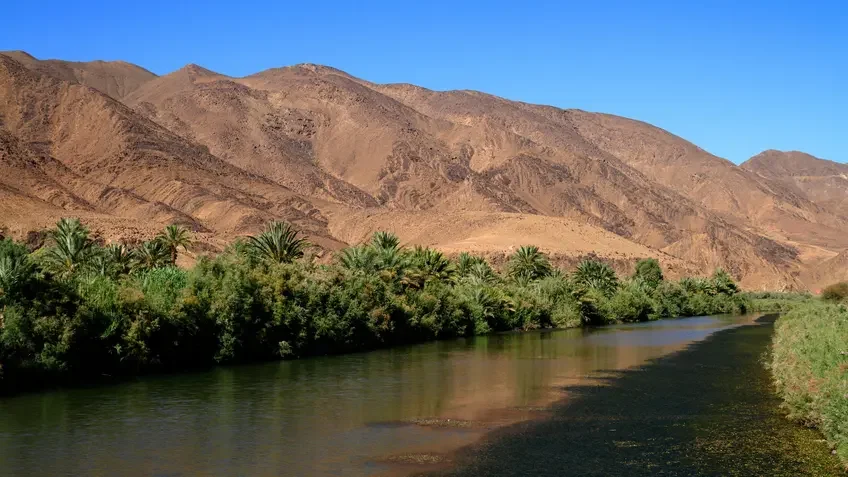
- Strengthening the resilience of oasis ecosystems in the Draa Basin, with USD 10 million in funding required: Focused on one of Morocco’s most climate-vulnerable regions, the project will benefit more than 500,000 people by improving water resource management, expanding agroforestry systems and reducing flood risks, protecting vital socioecological systems and local livelihoods.
- Scaling up direct seeding for rainfed agriculture, with USD 50 million in funding required: By promoting conservation agriculture and mechanized direct seeding, this initiative enhances soil fertility, reduces input costs and boosts agricultural resilience to droughts, contributing to both mitigation and productivity goals.
- Climate change adaptation in the mountain areas of Khenifra, with USD 10 million in funding required: Supporting over 100,000 people in mountainous regions, this project promotes irrigation modernization, soil erosion control and sustainable agriculture to strengthen food security and land stability.
- Decarbonization of the argan oil sector in Souss-Massa, with USD 40 million in funding required: This initiative supports women-led cooperatives through renewable energy integration and improved energy efficiency, reducing emissions while boosting productivity in Morocco’s iconic argan value chain.
- Decarbonization of the date palm sector in Drâa-Tafilalet, with USD 20 million in funding required: Installing solar systems in date processing units, this project enhances competitiveness and energy efficiency while contributing to Morocco’s clean energy transition in agro-industry.
- Valorization of electronic waste, with USD 4.4 million in funding required: A circular economy initiative that promotes e-waste recycling and material recovery, expected to prevent over three million tons of CO2 emissions and create green jobs in waste management.
- Energy and thermal rehabilitation of residential buildings, with USD 23.6 million in funding required: This urban-focused project aims to reduce energy poverty through thermal retrofits and solar-powered heating, aligning with Morocco’s broader strategy to decarbonize the building sector and improve household wellbeing.
Advancing Priority Projects
The Draa Basin water resources project, to be implemented by the Agricultural Development Agency (ADA), has already advanced to the next funding stage. With UNEP support through PAF, Morocco is preparing the project for large-scale financing through the Green Climate Fund (GCF). In preparing the GCF project preparation facility (PPF) application, the country aims to finance feasibility studies, environmental and social assessments and the technical proposal package.
This progression from evaluation to proposal development and project preparation shows that early-stage partnerships can shift climate priorities into actionable, finance-ready projects.
“The NDC Partnership’s support has strengthened our capacity to evaluate and design projects that attract finance,” said Mr. Razi Bouzekri, Secretary General, Ministry of Energy Transition and Sustainable Development and NDC Partnership focal point. “It gives us a clear and structured way to ensure our national priorities can be financed and implemented as quickly as possible.”
Scaling Investment and Sustaining Momentum
“The evaluation gave us a clear, evidence-based framework for prioritizing investment. It’s a model we can replicate across sectors to accelerate climate action and attract finance,” said Ihssane El-Maraouni NDC Partnership in-country facilitator. “Achieving financial sustainability remains a key challenge, however, requiring a greater focus on attracting private sector co-financing, blended finance and leveraging carbon markets to scale solutions nationally.”
Morocco demonstrates how countries can accelerate NDC investment and implementation through a clear and structured evaluation mechanism. With NDC Partnership support, the government is creating a replicable model to accelerate NDC implementation by expanding its climate project pipeline.
Alongside this work, the MTEDD is also currently seeking partner support to strengthen national capacities in mitigation and adaptation planning, loss and damage, carbon market and Article 6 national strategy implementation.
Visit the Morocco country page and find out more about the NDC Partnership’s regional adaptation finance series in Casablanca.