
On-the-Ground: How NDC Partnership In-Country Facilitators are Strengthening National Climate Action

As countries have developed third-round Nationally Determined Contributions (NDCs 3.0), a clear theme has emerged across regions: When additional capacity is embedded within governments, coordination among ministries, partners and stakeholders strengthens and support aligns more closely with national priorities.
In-country facilitators, deployed by the NDC Partnership, provide that capacity — connecting country priorities with the right expertise and resources.
The NDC Partnership has supported more than 100 countries with their NDC 3.0 development processes. Sixty-nine facilitators, embedded across 63 countries, have worked daily within ministries to bring line agencies and development partners together around a single, government-led process. Their efforts are helping countries prepare higher quality NDCs 3.0 and lay the groundwork for implementation.
Across contexts, facilitators make the NDC process more efficient by tracking progress, aligning partners and supporting government leadership by working closely with country focal points. From convening ministries to guiding technical inputs and mobilizing resources, facilitators are a crucial resource for national coordination.
Supporting and Strengthening the NDC 3.0 Cycle
Throughout the NDC 3.0 cycle, facilitators were deeply involved in national NDC development processes — from convening line ministries and organizing sector-specific working groups to synthesizing inputs across nongovernmental and civil society stakeholders. They have mobilized technical expertise from partners, guided and quality-assured external assistance and helped design the frameworks that shaped inclusive, whole-of-society engagement.
Working together with the national government and partners, facilitators are also deeply involved in the mechanics of the process by developing terms of reference for consultants, supporting procurement and ensuring that sector inputs arrived on time and aligned with government priorities. Many have helped review or even draft chapters of the NDCs themselves. Facilitators also support governments in mobilizing financial resources, matching them to sectors and priorities.
Across countries, this role took many forms, for example:
In Mongolia, facilitator Tamir Enkh-Amgalan, embedded in the Ministry of Environment and Climate Change, supported the establishment of a structured architecture for NDC development — from a national working group and 10 sectoral subgroups to an integrated crosscutting group and a sequenced submission timeline.
In Fiji, facilitator Mohammed Shorab helped deliver inclusive consultations with ministries and partners, linking sector priorities to the new NDC targets and coordinating technical inputs that reflected the country’s evolving climate goals.
In Palestine, facilitator Nedal Katbeh Bader coordinated with national authorities, non-state actors, UNDP and an international consultant to ensure the NDC 3.0 built on lessons learned from previous NDC cycles. This included supporting a comprehensive assessment of the national monitoring, reporting and verification (MRV) system within the Environment Quality Authority.
And in Saint Lucia, facilitator Onika Benn promoted a whole-of-society approach by mobilizing funds for youth participation, reaching 800 students across 25 secondary schools, supporting 11 interns in government agencies, and leading national youth consultations to capture young people’s priorities in the NDC.
“We have a great relationship with the NDC Partnership. Having a full-time, in-country facilitator has enabled a more efficient and effective system for networking, building relationships and coordinating data collection, which is critical given our severe staffing constraints," said Dawn Pierre-Nathoniel, Chief Sustainable Development and Environment Officer and NDC Partnership national focal point for Saint Lucia.
Moving From Ambition to Action
As countries pivot from planning to delivery, facilitators will support government efforts to translate NDCs into implementation and investment plans. These plans turn national targets into sequenced actions, map responsibilities and connect priorities to finance to ensure coordination continues beyond NDC submission.
“The in-country facilitator's practical work –– resolving bottlenecks and coordinating across ministries –– is the essential glue that helps us deliver meaningful climate action,” said Sum Thy, Director General at the Ministry of Environment of the Kingdom of Cambodia.
Facilitators support governments by helping them transform NDC targets into implementable policy through coordination and resource mobilization:
In Somalia, facilitator Abdullahi Khalif supported the Ministry of Environment and Climate Change in developing its NDC investment plan, bridging the NDC 3.0 and Long-Term Low Emission Development Strategy (LT-LEDS) with the financing required for delivery. He convened federal and state actors, supported development partner coordination through the FAO-led project supported by the Partnership Action Fund (PAF) and organized a post-NDC 3.0 donor consultation to present Somalia’s investment needs to partners.
In Kazakhstan, facilitators Ainur Kopbayeva and Aida Aliyeva mobilized resources for NDC 3.0 development, as well as coordinating NDC preparation, ensuring whole-of-society engagement and providing advisory support to the Ministry of Ecology and Natural Resources based on international good practices and stakeholder inputs.
A Growing Network for Implementation
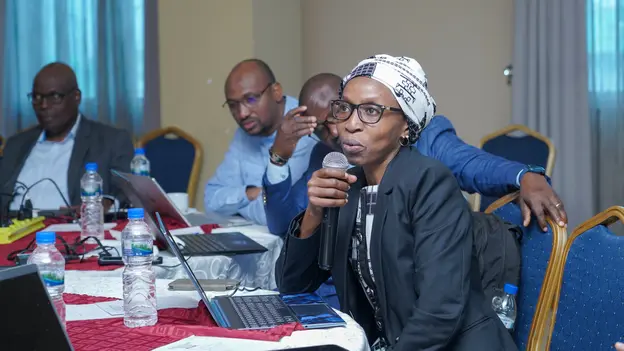
In late 2025, the NDC Partnership Support Unit convened four regional workshops in Panama City, Suva, Addis Ababa and Bangkok, connecting facilitators from more than 40 countries. The gatherings sought to strengthen the role of facilitators in matchmaking and stakeholder coordination under the NDC Partnership, sharing lessons on how to best support the shift from NDC 3.0 development to implementation.
This year’s regional convenings underscored that facilitators form a uniquely practical peer network. In Bangkok, 21 facilitators from 15 countries shared lessons on turning NDC targets into bankable projects, developing MRV systems and mobilizing finance. In Addis Ababa, facilitators from across Africa examined how to strengthen coordination mechanisms and resource mobilization pipelines.
“The facilitation role is like a bridge between what the government is doing and what partners are doing,” says Ruth Nyamasege, Kenya’s in-country facilitator. “It enhances communication on NDC priorities and ensures everyone moves in the same direction.”
Facilitators also exchanged strategies for using the NDC Partnership network and tools to monitor support requests and align partner delivery. The convenings highlighted shared problem-solving and institutional learning, reinforcing that while each facilitator works locally, they are connected to a growing global network of peers supporting governments in accelerating climate action.
Sustaining and Expanding the Model
As countries transition from planning to implementation, demand for facilitators is increasing. Several governments have requested new positions to sustain coordination capacity and follow through on investment planning. The NDC Partnership’s Support Unit continues to provide guidance, training, tools and regional exchanges to strengthen this network and ensure facilitators can operate effectively as neutral brokers within government.
Facilitators strengthen the coordination infrastructure of climate action in countries, aligning partners and resources to maximize the impact of support.
“If we really want to achieve meaningful mitigation and adaptation work,” says Abdullahi Khalif of Somalia, “the work of the country must be facilitated — among themselves and among their partners.”
Explore the NDC Partnership’s facilitator network and watch how facilitators are driving climate action on the ground.