
How Saint Lucia is Engaging Youth in its NDC 3.0 Process
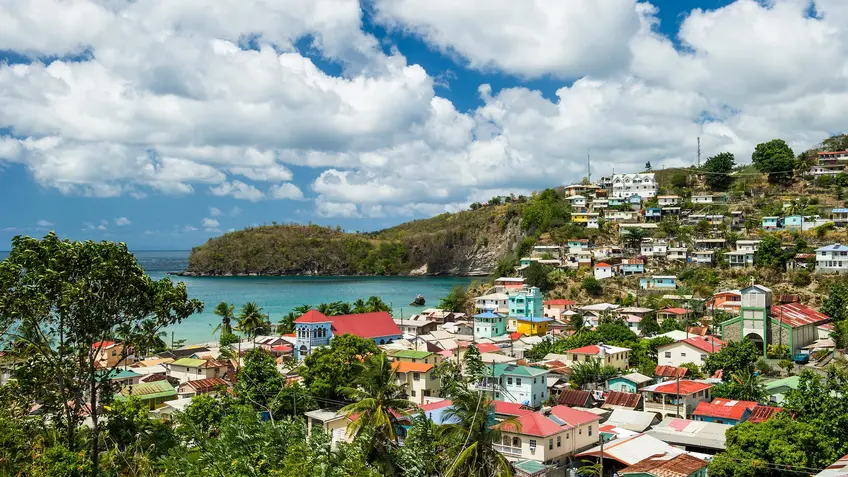
In February 2025, Saint Lucia became the first Caribbean country to submit its NDC 3.0, with a strong focus on intergenerational climate action. Youth engagement was part of the NDC development process from start to finish, reflecting the country’s commitment to whole-of-society participation.
With support from the NDC Partnership’s in-country facilitator, Saint Lucia is advancing a model of youth inclusion that combines public engagement, policy influence and formal representation.
Building Youth Capacity for Climate Leadership
Launched in 2024, Saint Lucia’s “Youth in Climate Change” project laid the groundwork for meaningful youth input into the country’s NDC 3.0. “The engagement of youth in the NDC 3.0 development was strategic and targeted,” said Onika Benn, the NDC Partnership in-country facilitator embedded in the Department of Sustainable Development. “It meant taking a targeted approach that does not just focus on the NDC but on building long-term capacity for young people to participate in developing climate change projects and plans.”
Over the course of six months, the Department of Sustainable Development engaged more than 800 young people, distributed over 500 LED bulbs to secondary and special needs schools, delivered technical training to 15 youth leaders and placed 11 tertiary students in one-month paid internships. “The internships were hands-on,” explained Benn. “This meant going beyond administrative tasks with substantive work like GIS [Geographic Information Systems] assessments, coral mapping and working with our electric vehicle project. The young people were able to actively work in government on some of the things we spoke about.”
A key part of the initiative was empowering youth to lead the outreach. “Instead of government officials engaging young people, we worked with national youth-led organizations to have them present climate change activities to their peers across the island,” Benn added. All secondary schools also committed to energy efficiency pledges, and the process culminated in a dedicated youth consultation on Saint Lucia’s NDC 3.0.
Embedding Youth Voices in Saint Lucia’s NDC 3.0
The facilitator was instrumental in aligning the project with Saint Lucia’s climate goals — designing the initiative, securing funding and leading its implementation. Dawn Pierre-Nathoniel, Chief Sustainable Development and Environment Officer and NDC Partnership focal point, highlighted the value of this role: “Having a full-time in-country facilitator has created a more efficient and effective system for networking, building relationships and enhancing coordination, especially given the staffing constraints we face.”
Youth input directly informed the NDC 3.0, which now includes dedicated provisions on youth and education. “The outputs from the youth consultation were directly integrated into the NDC,” Benn confirmed. “We continue to have a specific section on children and youth in the NDC 3.0, as previous NDCs, and we are really proud of that engagement.” These commitments promote youth participation in climate decision-making, aligned with national development strategies and the National Adaptation Plan (NAP).
The project also contributed to regional collaboration. With support from the UNFCCC Regional Collaboration Centre, Saint Lucia facilitated a peer exchange with the Barbados and Eastern Caribbean Youth Action Group, connecting youth from Barbados, Guyana and other Eastern Caribbean countries to advance South-South climate cooperation.
Through the project, two youth leaders were selected to join the Climate Youth Negotiator Programme. One of them was later funded to participate fully in COP 29 in Baku, Azerbaijan, and the Caribbean Investment Forum on NDCs in Grenada, while another took part in a Commonwealth Youth Climate Training in the United Kingdom.
Institutionalizing Intergenerational Climate Action
At the national level, youth representation is now legally part of Saint Lucia’s climate governance. Under the 2024 Climate Change Act, the National Youth Council (NYC) and the national chapter of the Caribbean Youth and Environment Network (CYEN) are legal members of the National Climate Change Committee (NCCC), which oversees climate policy coordination. Both groups played key roles in the NDC 3.0 consultation process.
“This builds on a long history of inclusion,” noted Pierre-Nathoniel. “For years, we have tried to include youth on the official delegation going to the Conference of Parties (COP). The NCCC has long had youth representation, and this is now formalized in the Act.”
By embedding youth across planning, implementation and governance, Saint Lucia is building a model for intergenerational climate action — cultivating future leaders and strengthening national capacity for long-term climate resilience. "We are already seeing the ripple effect, with youth leaders now participating in climate meetings and providing feedback on new documents,” said Benn. “It's about ensuring they are consistently engaged in how we develop and implement climate policy.”