
How Zimbabwe Is Bringing Climate Action to Communities
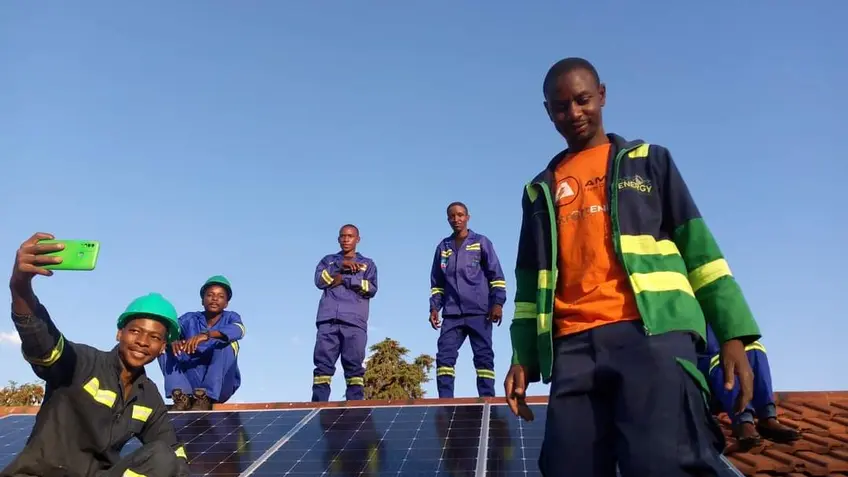
Zimbabwe recognizes that achieving its Nationally Determined Contribution (NDC) goals requires strong public participation, which is best achieved when the public understands the implications of climate change and their role in addressing it.
With funding from the Partnership Action Fund (PAF), SNV Netherlands Development Organization (SNV) and the Government of Zimbabwe, through the Ministry of Environment, Climate and Wildlife (MECW), implemented an Action for Climate Empowerment (ACE) project designed to strengthen broad-based participation in NDC and National Adaptation Plan (NAP) implementation.
Through the project — “Amplifying Youth, Women and People with Disabilities’ Role in Implementing Zimbabwe’s NDC and NAP” — Zimbabwe trained community members and expanded public awareness on climate change issues, bringing climate policy discussions closer to the subnational levels. By equipping communities with resources to learn about and apply national climate policies, Zimbabwe is strengthening whole-of-society climate action.
Elevating the Voices of Marginalized Groups
A training of trainers (TOTs) workshop series equipped community leaders and civil society members to engage in climate governance, communicate national priorities and identify sector-specific, locally relevant adaptation and mitigation actions.
Through multi-day workshops held across seven of Zimbabwe’s 10 provinces, participants were trained on the National Climate Policy, NDC, NAP and broader climate governance frameworks, enabling them to share these priorities within their communities. The workshops prioritized inclusivity — of the 147 participants, 88 were women, 29 were youth and 35 were persons with disabilities.
Trainers encouraged participants to share knowledge and stories emerging from their communities and networks to build broader awareness of climate impacts at the local level and identify priority adaptation and mitigation actions aligned with national climate policy.
“Climate change doesn’t affect everyone equally,” says Kudzai Ndidzano, Deputy Director responsible for Climate Change Adaptation at MECW. “We must prioritize the needs of women, youth and persons with disabilities to ensure a just transition for all.”
By engaging and building a cohort of local leaders, Zimbabwe is helping ensure that those most vulnerable to climate impacts have a stronger voice in shaping local and national climate responses and resilience strategies.
"The inclusive approach adopted by the project ensures that climate action reflects the voices, knowledge and priorities of communities most affected by climate change,” adds Marcos Nyaruwanga, NDC Partnership focal point and Director of the Public Sector Investment Programme at the Ministry of Finance, Economic Development and Investment Promotion.
Sharing Climate Information Locally, Regionally and Nationally
To improve public access to climate information, the government, with support from SNV, expanded outreach through digital platforms, community networks and media.
SNV and the MECW developed the Climate Change Knowledge Portal –– an online platform providing centralized access to climate policies, strategies and technical information. The portal enables policymakers, civil society and communities to better understand both Zimbabwe’s climate risks and commitments.
At the community level, MECW partnered with Zimbabwe Postal Services (ZIMPOST) to distribute climate information materials through 16 community information centers (CICs) across the country, extending access to rural and peri-urban areas.
These materials translate complex climate policies into practical guidance, helping communities understand emission-reduction concepts and how local actions contribute to national goals. They include tailored resources highlighting the roles of youth, women and persons with disabilities, alongside existing tools such as Zimbabwe’s Climate Smart Agriculture Manual, which provides guidance on conservation farming, crop diversification, water harvesting, irrigation practices and drought resilience.
Zimbabwe also expanded outreach through media and digital platforms. In partnership with the Zimbabwe Association of Community Radio Stations (ZACRAS), climate programs aired across 16 community radio stations, reaching approximately 250,000 listeners within three months. The popular television drama series Sabhuku Vharazipi integrated climate concepts into relatable storylines, illustrating the human impacts of climate change and the benefits of climate action.
Content was delivered in multiple local languages, including Shona, Ndebele, Tonga and Venda, and complemented by accessible formats such as sign language to ensure broad reach. Project partners also developed information, education and communication (IEC) materials, interactive tools and a WhatsApp climate chatbot to support ongoing dialogue on climate action.
Together, these efforts significantly expanded access to climate information across Zimbabwe, strengthening awareness and enabling communities to engage more actively in climate action.
Integrating Outcomes and Scaling Implementation
As Zimbabwe prepares for the validation, launch and implementation of its NDC 3.0, the government is exploring opportunities to expand the ToT workshop series to the remaining provinces, including through blended and online learning approaches.
Zimbabwe is also seeking additional resources to scale these efforts and establish frameworks to measure the long-term impacts of climate education and awareness on community-level adaptation, mitigation and resilience.
“This collaboration highlights the transformative power of partnerships in advancing inclusive climate action,” says Richwell Musoma, NDC Partnership in-country facilitator. “By bringing together government institutions, civil society, development partners and under-represented groups, the project has helped accelerate Zimbabwe’s NDC implementation while ensuring that no one is left behind.”
"This work has been instrumental in strengthening inclusive climate action in the country," adds Lovemore Dhoba, NDC Partnership focal point and Acting Director of the Climate Change Management Department. "By empowering youth, women and persons with disabilities to actively participate in climate governance and action, the initiative has reinforced the partnerships and systems needed to deliver on Zimbabwe’s NDCs and broader climate commitments.”
With PAF support, Zimbabwe is building the foundation for climate action that is national in ambition and local in practice, grounded in the knowledge, experiences and priorities of communities across the country.
Zimbabwe is also advancing additional priority areas of support through the NDC Partnership, including the development of a NAP investment framework.