The Five Levers for Effective Project Preparation
Countries are not short on climate project ideas. The challenge is helping promising concepts reach financing.
Emerging markets and developing economies (EMDEs) other than China require approximately USD 3.2 trillion in annual climate- and nature-related investments by 2035. Achieving that level of investment will depend on a robust portfolio of well-prepared, implementable and investment-ready projects that connect national climate priorities with financing opportunities.
Currently, investment-ready projects in EMDEs remain scarce, despite a pipeline of early-stage concepts. In Africa, for example, 80% of infrastructure projects fail at the feasibility and business plan stage and fewer than 10% reach financial close. This preparation gap is also visible in the demand the NDC Partnership receives directly from its country members. To date, the NDC Partnership has received more than 1,300 requests from over 80 countries for support to develop bankable climate projects and pipelines — and just under 30% of these technical assistance requests have been fully supported. The NDC Partnership responds on three fronts: in-country support that builds capacity within governments, knowledge tools that map the support landscape and connection functions that match NDC priority projects with support providers and financiers.
A new Policy Brief developed by the Rocky Mountain Institute (RMI) and the Center for Access to Climate Finance, hosted by the NDC Partnership Support Unit, “Project Preparation 2.0: From Bottlenecks to Breaking Ground,” identifies the conditions required for more effective project preparation for priority climate projects in EMDEs. The Policy Brief, developed as a contribution to the Taskforce on Access to Climate Finance, proposes five mutually reinforcing levers which represent a practical reform agenda for strengthening climate-aligned project preparation.
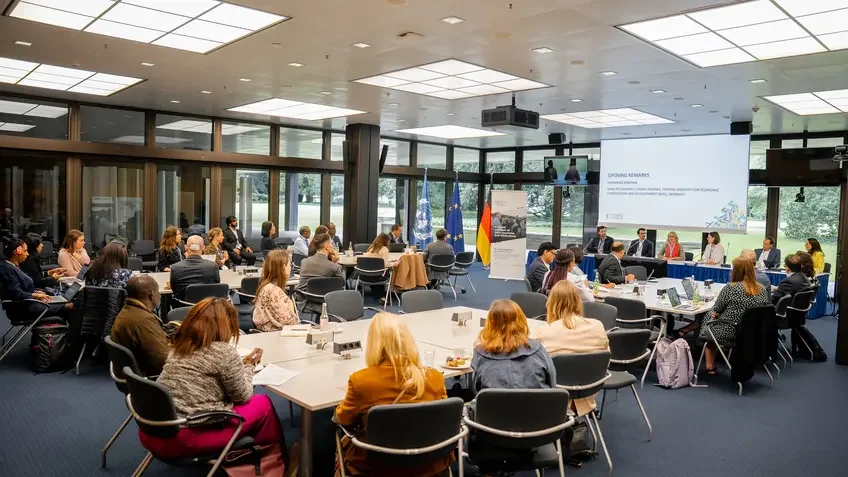
A peer exchange convened by the Center for Access to Climate Finance on the margins of SB64 highlighted examples of countries and project support providers already applying some of these levers. Taken together, they present a significant opportunity for countries, project preparation facilities (PPFs) and other project support providers and ecosystem enablers to approach project preparation more systematically and effectively.
From External Support to Embedded Capacity
The first and most foundational lever is to embed more robust climate-aligned project preparation capacity inside national systems, rather than relying exclusively on short-term external consultancy support for core project development functions.
Dedicated structures, such as climate finance units (CFUs), project preparation units and similar project development hubs, provide targeted capacity needed to translate national strategies into prioritized, sequenced investment pipelines, coordinate external support and maintain continuity across political and funding cycles. These embedded teams can help connect project preparation to ministries of finance, relevant line ministries and national budget processes, which facilitate a smoother conversion of national priorities into viable financing pathways.
For example, Uganda’s CFU, embedded within the Ministry of Finance, Planning and Economic Development, screens project proposals against national climate and development priorities and identifies areas of overlap and opportunities for scale to advance promising investments.
Similar project identification and prioritization approaches to Uganda’s are emerging in other countries. However, many countries still face challenges in securing sufficient funding and resources, coordinating between government agencies and retaining institutional capacity across funding windows. Addressing these constraints requires practical measures such as embedded advisors and secondments, pipeline development and tracking systems and investing in long-term solutions including formal mandates, structures and dedicated staffing and resources within countries.

Building long-term capacity within national institutions can help sustain project development beyond individual funding cycles.
From Multiple Entry Points to Navigable Systems
The second lever focuses on reducing the complexity that countries and project developers face when advancing projects from concept to feasibility, structuring and financing.
Climate-aligned project preparation support has expanded significantly over the last decade, with dozens of facilities now operating across multilateral development banks (MDBs), development finance institutions (DFIs), climate funds, national institutions and developer-oriented platforms. This growth signals wide recognition of the project preparation gap between early-stage concepts and investment-ready projects, but it has not produced a coherent system. Facilities operate with different mandates, templates, funding models and approval cycles, which create friction for project proponents and fragmentation across project development.
Methods such as harmonized intake forms, common minimum information standards and handoff notes can make existing support easier to navigate for project proponents in EMDEs and reduce transaction costs for project proponents and financiers, while increasing the synergies between support providers.
Emerging initiatives illustrate how greater alignment is possible. Early experience with the Cities Climate Finance Leadership Alliance (CCFLA)'s PPF Connector, which has now concluded, showed that structured intake, common data fields and centralized visibility can improve coordination among PPFs and reduce frictions in the matchmaking process for project proponents. Similarly, the NDC Partnership’s Project Checklist pilot equipped participating countries with a tool to standardize project information, helping connect NDC priority projects with technical assistance and financing opportunities. In Colombia, the Project Checklist was integrated into the country’s Climate Finance Broker Facility to strengthen project identification and matchmaking efforts.
Along with developing shared project intake forms and standards, providing greater visibility to wider project support efforts can help countries better navigate available project preparation offers and identify the most relevant windows for specific projects. The NDC Partnership Project Preparation Support Database is one such tool and provides a searchable database of international, regional, national and subnational PPFs, as well as incubators and accelerators that support climate-aligned projects.

Project preparation is more effective when countries can easily identify, access and connect with the support they need.
From One-Size-Fits-All Funding to Segmented Models
The third lever moves beyond grant-only preparation toward a funding architecture that is matched to project type, stage and revenue potential.
Rather than relying on a single funding model, project preparation support should draw on a mix of instruments tailored to the characteristics and needs of different projects. The choice of instrument must also reflect implementation realities such as limited official development assistance (ODA) and significant audit requirements for non-grant instruments. Grants remain essential, particularly for public-good activities and non-revenue-generating projects. However, a grants-only approach is unlikely to support the scale of project preparation required in most countries.
A more differentiated funding architecture can expand the number and range of climate projects that receive preparation support by matching funding models to project stage, project type, proponent capacity, revenue potential and likely financing pathway. For revenue-generating climate infrastructure projects, instruments such as reimbursable technical assistance, success fees and revolving funding windows are also viable financing options. Private sector pipelines could require developer-style risk capital and other forms of catalytic support to help projects advance through higher-risk early stages and attract subsequent investment.
These models already exist where conditions are suitable. For example, the Asia Pacific Project Preparation Facility at the Asian Development Bank is structured so that support for some concession-type PPPs is cost-recoverable when transactions reach award or financial close. This allows project preparation resources to be reused for future projects. PIDG’s InfraCo goes further, operating as an early-stage developer that invests risk capital during preparation and recovers costs or upside when projects reach later investment stages. Wider adoption, however, requires changes to facility mandates, fiduciary rules, legal agreements and reporting systems so reflows are managed transparently, without weakening grant support for non-revenue, public-good projects.
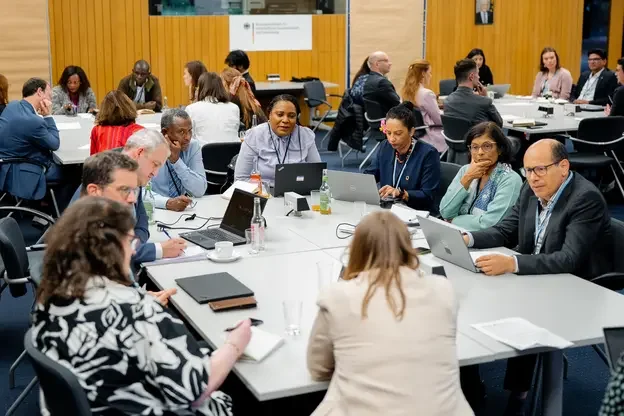
Tailoring the range of preparation funding can help more projects advance from concept to delivery.
From Scale Bias to Support for Underserved Segments
A fourth lever focuses on ensuring that project preparation support reaches projects and proponents often underserved by project preparation efforts.
Small-scale, adaptation-focused and locally led projects frequently face barriers accessing project preparation support due to high preparation costs relative to project size, limited technical and institutional capacity and a tendency for existing support models to prioritize scale, revenue potential and larger markets.
An important starting point for the fourth lever is recognizing that underserved climate projects are not a single category. Community-led and nature-based solutions, projects with relatively small ticket sizes and projects in Small Island Developing States (SIDS) and Least Developed Countries (LDCs) each face distinct capacity, financing and implementation challenges.
Expanding targeted support to these underserved segments requires dedicated windows, simplified project support processes, capacity building and mentoring that reflect their specific needs and constraints. Cohort models, standardized toolkits and sector playbooks can help reduce the unit cost of project preparation, while programmatic approaches can make project development support more viable for underserved segments at scale by grouping similar projects and creating coherent pipelines that providers and financiers can support over time. As an example, the UN Capital Development Fund Local Climate Adaptive Living Facility (LoCAL) applies a locally led, programmatic approach, combining performance-based grants with technical assistance and existing public financial management systems to strengthen adaptation. Countries have also pointed to capacity building methods including dedicated “writeshops” — intensive collaborative workshops focused on drafting project concepts and proposals — as helping advance local proposals and strengthen their ability to access funding.
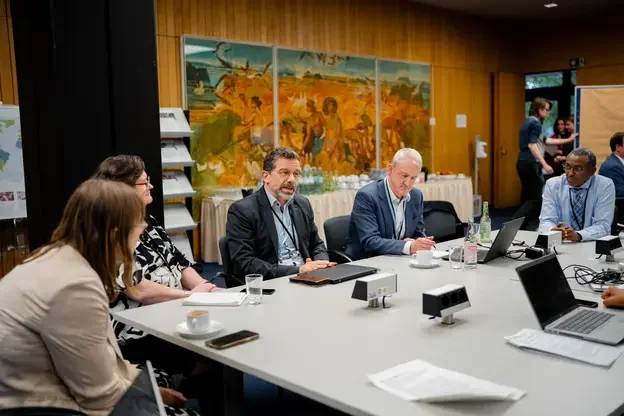
Supporting projects that are often overlooked by traditional preparation models is crucial to countries meeting their climate commitments.
From Isolated Efforts to Learning Systems
The fifth lever involves making project preparation efforts more visible, accountable and responsive to results.
Incorporating monitoring and evaluation within climate-aligned project support allows for countries, DFIs, MDBs and project support providers to tailor project support offerings based on best practices and lessons learned. The GCF’s 2026 independent evaluation of its Project Preparation Facility found that PPF-supported projects reached effectiveness under their funded activity agreements in a median of 8.4 months after funding proposal submission, compared with 15.4 months for comparable non-PPF projects. It also found that existing monitoring systematically tracks approval and disbursement activity, whereas conversion rates, preparation quality and outcomes are measured less consistently — reinforcing the need for shared indicators and stronger learning across the project preparation ecosystem. Recent policy processes, including the COP30 Circle of Finance Ministers, have also started proposing KPIs for project preparation. This reflects growing recognition that monitoring and learning what works in project preparation, and adjusting what does not, is crucial to expanding and improving the efficiency of future project support.
However, project preparation stakeholders still need to agree on a common set of indicators and light-touch data-sharing protocols and clarity on who collects, aggregates and uses lessons learned. Practical starting points include voluntary minimum KPI sets and lightweight dashboards which track projects by stage, conversion rates between stages, time per stage and the distribution of support to underserved segments — designed as learning tools, not ranking exercises.

Improved project preparation results come from understanding what helps projects move forward and applying those lessons more broadly.
Looking Ahead
Taken together, these insights point toward a systemic approach to project preparation. The five levers can help connect projects to financing earlier, reduce friction across the project lifecycle and expand support to underserved segments.
Moving from diagnosis to action, countries are focused on identifying and prioritizing project pipelines, coordinating preparation across stakeholders and integrating finance pathways early.
The Center and RMI are now developing a second, more practical Policy Brief, planned for publication in early 2027, examining how countries are establishing and operationalizing national project preparation systems. It will explore models including climate finance units, project preparation units and country platforms and provide practical guidance for building country capacity to identify, prioritize, prepare and connect climate investment pipelines to finance.
Read the full Policy Brief.