
NDC Partnership Support Unit and Asian Development Bank Issue Guidance to Unlock Subnational Climate Finance
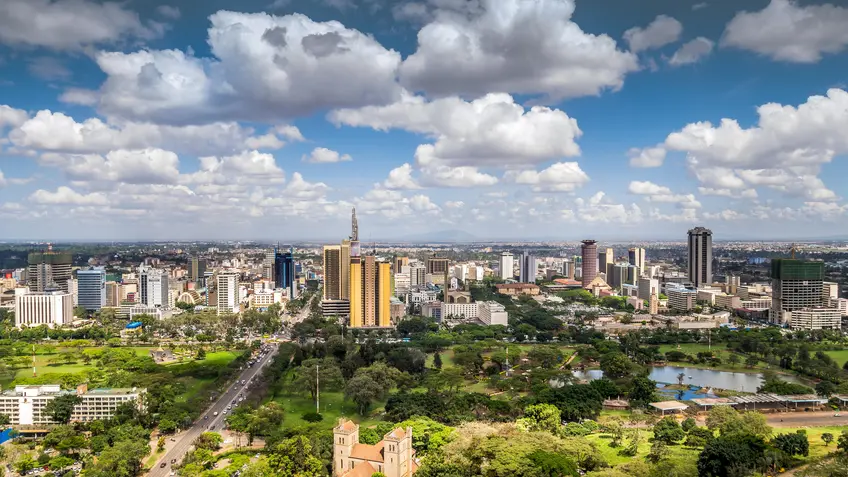
21 October 2025 — The NDC Partnership Support Unit and Asian Development Bank (ADB) launched new guidance to help countries mobilize finance for subnational climate action.
Roughly 58% of the global population lives in urban areas, an estimate that is expected to increase to 70% by 2050. With rapid urbanization and increasing demands on energy and transport systems, subnational governments — including cities, regions and other subnational spaces — govern areas currently responsible for over 70% of global greenhouse gas emissions.
Yet despite steady increases in annual average urban climate finance flows, which reached an estimated USD 831 billion between 2021 and 2022, a large finance gap remains due to weak enabling environments, a lack of bankable projects and limited institutional, technical and fiscal capacities at the subnational level.
As countries prepare the next round of climate pledges — their Nationally Determined Contributions (NDCs) — countries can further elevate the role of subnational governments in driving changes that enhance community resilience and drive low-emission economic development.
The “Subnational Investment Planning Supplement” launched today by the NDC Partnership Support Unit and ADB guides national governments — along with financial institutions and non-governmental organizations — toward mobilizing investments in subnational climate action. The guidance is a supplement to the “Climate Investment Planning and Mobilization Framework” (CIPMF) online tool, which prepares countries to navigate the steps required to unlock and channel climate finance.
Through practical guidance, the Subnational Investment Planning Supplement equips countries to map existing investment frameworks, identify key barriers to subnational investment, develop bankable projects and programs and engage the private sector.
NDC Partnership Global Director Pablo Vieira: “By mobilizing investment in subnational climate action, countries can build strong local communities alongside subnational partners — unlocking new economic opportunities, resilient infrastructure, cleaner air and more sustainable transport systems. Subnational action drives impact and should be fully integrated into national climate strategies.”
Noelle O’Brien, Director Climate Change, Asian Development Bank: “The role of subnational actors is crucial in tackling climate change, with over half of anticipated mitigation and adaptation measures at the local level. This new guidance provides a practical framework to align local development with climate ambition, enhancing coordination across governance levels and boosting flows of much needed public and private climate finance.”
Explore the full Subnational Investment Planning Supplement and access the CIPMF online tool.
More About the CIPMF Online Tool
In response to country demand for finance support, the NDC Partnership and Green Climate Fund (GCF) launched a working draft of the CIPMF in 2023 at COP28 in Dubai with input from a range of actors, including private and public institutions and country representatives. Building on this guidance, the CIPMF online tool is a first-of-its-kind resource that outlines six key stages across the climate investment planning and resource mobilization process.
Allowing flexible user-entry points for countries at different stages of the finance planning process, the CIPMF enables countries to identify climate finance needs and gaps, develop finance strategies and project plans and map support providers and finance opportunities — tailored to their national contexts.