
Advancing Gender-Responsive Climate Action: Lessons from Developing Countries
Climate policies are more effective when they reflect the realities of the people they are designed to support. Women and girls, particularly in rural and marginalized communities, often face disproportionate climate impacts due to unequal access to economic resources, public services and decision-making opportunities. As countries implement more ambitious climate commitments, governments are recognizing that prioritizing gender equality and social inclusion (GESI) can improve national development outcomes.
But what does gender-responsive climate action look like in practice?
A new best practice brief draws on lessons from targeted technical support provided by Environment and Climate Change Canada (ECCC) and delivered through the NDC Partnership between 2023 and 2026, highlighting country-led approaches to ensuring climate measures are inclusive and impactful.
Key findings include:
Countries are embedding gender equality into climate governance and expanding inclusive participation
Mainstreaming GESI into climate policies helps ensure implementation efforts reflect the needs and priorities of communities most impacted by climate change. Countries are increasingly embedding whole-of-society perspectives within NDCs, while creating opportunities for women, Indigenous Peoples and other underrepresented groups to shape gender-responsive climate solutions.
For example, Chad employed a gender analysis to inform ongoing NDC 3.0 development, contributing to the promotion of more inclusive targets, including suggesting women represent at least 40% of local climate and risk management decision-making bodies by 2030.
Countries are also developing gender action plans to translate NDCs into concrete action plans with clear indicators for tracking progress. Malawi's National Climate Change Gender Action Plan provides a roadmap for incorporating gender considerations within climate planning, budgeting and data systems while improving accountability across the government.
Costa Rica's NDC 3.0 development process highlights how inclusive participation can help integrate community knowledge into national climate planning. Through 22 workshops conducted across 20 Indigenous territories and a dedicated gender-responsive dialogue, women helped shape priorities related to territorial planning, sustainable livelihoods and biodiversity conservation. These priorities were incorporated into the country's NDC 3.0 alongside gender-responsive indicators designed to track how climate policies affect different groups within society.
Countries are improving data, monitoring and reporting systems to support implementation
Collecting, using and reporting gender-disaggregated outcomes is foundational to effectively implementing and tracking gender-responsive climate action. Countries are investing in gender-sensitive data systems, assessments and monitoring frameworks to better understand who benefits from climate action and where gaps remain.
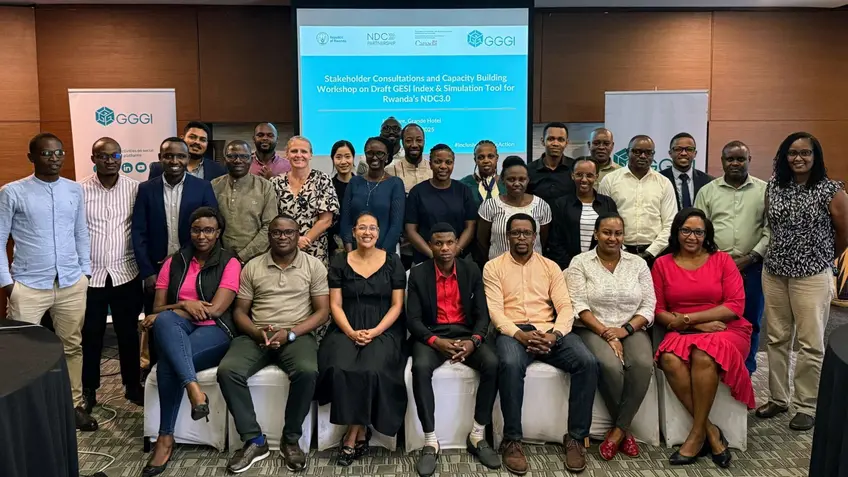
For instance, Rwanda, with support from the Global Green Growth Institute (GGGI) through the NDC Partnership, developed a GESI Index and Simulation Tool to help policymakers assess gender outcomes across sectors and inform future planning. A survey conducted through the process found that 86% of participating institutions reported having GESI policies or strategies, although implementation challenges persist.
Countries are also incorporating gender considerations into national climate transparency frameworks. Mexico integrated gender, human rights and intersectionality considerations into its First Biennial Transparency Report and Seventh National Communication to the UNFCCC with support from GGGI mobilized through the NDC Partnership. As part of this effort, the country developed a dedicated gender annex highlighting 16 national initiatives related to gender and human rights in climate action and identified recommendations for integrating gender considerations across mitigation, adaptation, transparency and capacity building efforts.
Capacity building is helping countries operationalize climate commitments
Capacity constraints persist as a major barrier to implementing gender-responsive climate action, underscoring the importance of improving knowledge and skills across government. Countries are responding by investing in tailored training and technical assistance to help operationalize climate commitments.
Through district-level “training-of-trainers" sessions supported by the Common Market for Eastern and Southern Africa (COMESA) through the NDC Partnership, Zambia built local capacity for gender-responsive climate action and utilized gender-based climate risk assessments in community development planning. The trainings helped align district-level priorities with national climate frameworks while promoting community leadership. Capacity building efforts are most effective when materials are available in Indigenous languages and tools are adapted to local contexts. For example, the Kyrgyz Republic in partnership with the United Nations Institute for Training and Research (UNITAR) through the NDC Partnership, developed training materials in both Russian and Kyrgyz to make gender-responsive climate action training more accessible and relevant to a wider range of stakeholders.
Targeted investments and women-led implementation are translating national ambition into community-based action
Countries are increasingly aligning climate investments with gender-related priorities and expanding opportunities for women to lead and implement climate action at the community level.
Burkina Faso used a gender-sensitive assessment of NDC implementation to inform recommendations for its NDC 3.0, including ensuring rural electrification projects support income-generating opportunities for women. Rwanda is also embedding GESI considerations into NDC implementation plans, sectoral strategies and budgeting processes, while Mexico is integrating gender considerations at the project design stage by engaging gender specialists and women in planning consultations.
Countries are also showing how women can help drive implementation. In the Maldives, a nature-based adaptation project engages women's development committees, local councils and youth groups in monitoring and decision-making, supporting women as key actors in reed cultivation, weaving and wetlands restoration. The Republic of the Marshall Islands is expanding women's participation in the renewable energy sector through the Women in Solar Project, which provides women living on remote islands with the training, tools and support needed to install, operate and maintain solar home systems, strengthening both local capacity and energy resilience.
Country experiences highlight pathways for gender-responsive climate outcomes
From Costa Rica's consultations with Indigenous communities and Malawi's National Climate Change Gender Action Plan to Rwanda's GESI Index and Simulation Tool, countries are utilizing a variety of measures to advance gender-responsive climate action.
The experiences highlighted in the brief point to several areas where countries are making progress, including expanding women's leadership at the community level, strengthening data and monitoring systems and investing in the capacities, financing mechanisms and projects needed to support implementation efforts.
As countries implement their NDCs, the integration of GESI within national policies and across all levels of government will play an important role in building resilience, supporting sustainable development and ensuring climate measures reflect the needs and priorities of all members of society.
Read the full "Best Practice Brief: Advancing Gender-Responsive Climate Action" for detailed recommendations, lessons learned and country examples.
